top of page

IMAGINE YOUR LIFE WITH FEWER MIGRAINES

HOPE.  RELIEF. 
A NEW DIRECTION

A FUTURE WITH FEWER MIGRAINES STARTS TODAY

What is TEMMA?

TEMMA (Targeted Embolization for Migraine Management)
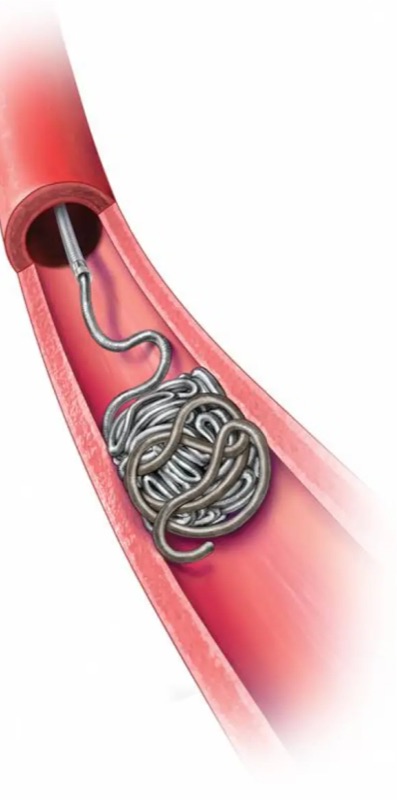
  • TEMMA is a minimally invasive treatment designed to help people with chronic, hard-to-treat migraines. It works by gently sealing a small artery inside the skull called the middle meningeal artery (MMA) using a tiny soft coil.

  • The MMA supplies a tissue layer called the dura, which contains many of the pain-sensing nerves involved in migraine. Research suggests that when this system becomes overactive, it can trigger migraine attacks.

  • TEMMA aims to reduce these abnormal pain signals by safely blocking the MMA.

  • No brain surgery. No incisions on the head. No hospital stay.

Image by Aiony Haust
MRI Scan Image

How it Helps:

By calming the migraine-producing pathway in the dura, TEMMA may:

  • Reduce how often migraines occur

  • Make attacks less severe

  • Decrease medication use

  • Improve daily functioning and quality of life

​

TEMMA is performed by fellowship-trained neurointerventional specialists using advanced imaging technology. The entire procedure is typically done in under thirty minutes, and patients go home the same day.

Am I a Candidate?

TEMMA may be appropriate for people who have:

  • Severe migraine (8+ headache days per month)

  • Frequent migraine attacks that limit daily life

  • Medication-overuse headaches

  • Migraines not responding to standard treatments

  • Side effects or poor tolerance to migraine medications

  • Hormonal or menstrual migraines

  • A positive response to the lidocaine test​

  • ​A consultation with one of our providers will help determine your eligibility.

Diverse Team Portrait

Steps for TEMMA

STEP 1 — Office Visit & Evaluation

Your journey begins with a visit to a migraine-trained neurointerventional specialist.

  • We review your migraine history

  • Look at what treatments you’ve tried

  • Examine your imaging (MRI/CT)

  • Discuss how migraines affect your daily life

  • Explain the TEMMA procedure and answer questions


If TEMMA seems appropriate, we schedule the lidocaine test.

ChatGPT Image Dec 5, 2025, 06_27_53 PM.png

STEP 2 — The Lidocaine Test (Diagnostic Step)

This is a short procedure that helps predict whether TEMMA will work for you.

  • The Lidocaine Test is similar to the TEMMA procedure.

  • A tiny numbing injection is placed at the wrist or groin.

  • A thin catheter is guided into the MMA using live X-ray imaging.

  • A small amount of lidocaine (numbing medicine) is injected directly into the artery.

  • You tell us whether your migraine pain significantly improves over the next several days to weeks.

  • If your migraines significantly improve following the lidocaine injection, there is a very strong chance you will benefit from TEMMA.

STEP 3 — The TEMMA Procedure

(Coil Embolization)

If the lidocaine test is positive, we move forward with the actual treatment.

  • During the TEMMA procedure you receive local anesthesia and light sedation.

  • A tiny 2–3 mm opening is made at the wrist or groin.

  • A microcatheter is guided into the MMA.

  • A soft platinum coil is placed into the artery.

  • The coil seals the artery, reducing dural inflammation.

  • Procedure time: 20–30 minutes
    Hospital stay: none
    Recovery: home the same day

  • The MMA does not supply brain tissue, so sealing it is considered safe and well tolerated.

Screenshot 2025-12-05 183618_edited_edited.jpg
Screenshot 2025-12-05 185027.png

STEP 4 — TEMMA Recovery

Recovery after TEMMA is typically quick and uncomplicated.

Immediately After the Procedure

  • You rest for 1–2 hours

  • A small bandage is placed at the wrist or groin

  • You go home the same day with simple instructions


Most Patients Experience:

  • Mild fatigue

  • Soreness at the access site

  • Temporary scalp sensations

  • Improved migraine activity within days to weeks


When You Can Return to Normal Activities

  • Light activity: same day or next day

  • Work: usually next day

  • Exercise: 2–3 days

  • Full recovery: within 1 week

​

Patients should begin to notice fewer or milder migraines within the first few weeks, with continued improvement over time.  Individual results may vary.

Is It Safe?

TEMMA uses a well-established neurointerventional technique called coil embolization, which has been performed thousands of times worldwide for other conditions, especially chronic subdural hematomas.

Key Safety Points

  • Coils have been used safely in neurovascular procedures for over 40 years.

  • The MMA does not supply the brain, so closing it does not affect brain function.

  • TEMMA is performed by fellowship-trained neurointerventional specialists.

  • The access point is tiny — usually closed with a bandage.

  • Most patients resume normal activities within 24 hours.

​​

Possible Side Effects (Usually Mild & Temporary)

  • Scalp tingling

  • Mild headache or pressure

  • Fatigue for a day or two

  • Bruising at the wrist or groin

  • Serious complications are rare but will be reviewed during consultation.

Does It Work?

Current research clearly shows that the MMA–dura system plays a crucial role in migraine physiology. Targeting this pathway directly is an emerging treatment approach with increasingly positive results. Early data from MMA-targeted therapies — including the newest 2025 prospective study — are highly encouraging, and larger studies are actively underway to confirm long-term benefits.

Key Research Findings​

​

  • 1. The dura and MMA are central to migraine pain.

Studies show that blood vessels in the dura activate pain fibers during migraine.
The MMA supplies this tissue directly.
(Brain, 2019; Burstein et al.)

  • 2. Most migraine medications work on this same pathway. 

Triptans, DHE, CGRP inhibitors, and NSAIDs all reduce signaling in the dural vessels. TEMMA provides a longer-lasting version of this effect.

  • 3. MMA embolization improves headaches in other conditions.

Patients receiving MMA embolization for chronic subdural hematomas report significant headache improvement — even when the treatment was not intended for migraine.
(Surgical Neurology International, 2021)

  • 4. A 2025 prospective trial of MMA embolization for refractory migraine reported:

★ 80% reduction in headache days (median 23→5 days/month)

★ Significantly lower pain scores across multiple scales

★ Significantly decreased medication use

★ Significantly improved function, disability scores, and quality of life

★ Strong safety profile with no major neurologic complications

These results strongly support the concept that modifying MMA blood flow can meaningfully reduce migraine burden in appropriately selected patients.

Xu et al., International Journal of Surgery (2025)

  • 5. A positive lidocaine test predicts benefit.

Patients who respond during the lidocaine test generally experience the greatest improvement after embolization.
(Clinical observational data, multiple case series)

Research
TEMMA Logo
bottom of page